
You don’t have to take my word for it.
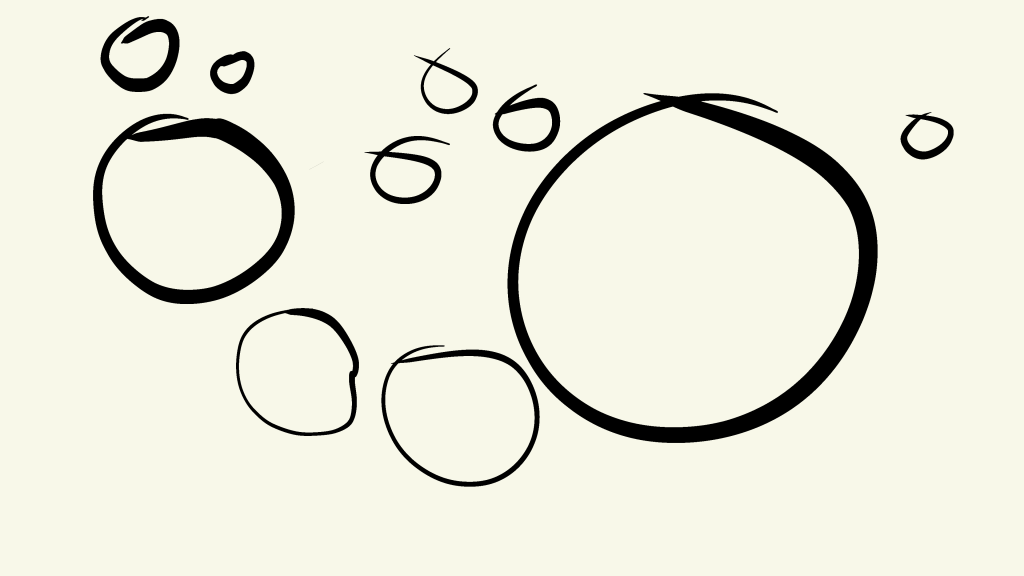
Take out a piece of paper and a pen or pencil. Go ahead. I’ll wait. (Jeopardy theme music plays) Good. Now, draw a circle. You choose where and how big. Draw freehand is the only rule. Don’t use a template, stencil, compass or any other tool. Just use your hand.
Done? If you haven’t, I encourage you to do so. There’s a point, I promise and drawing the circle is the first part. Now look at the circle. Is your circle perfect? Did the ends line up or did you have to fudge a bit?
If I had a computer draw the circle it would be perfect. No matter how big or how small, the computer would get it right the first time or the hundred and seventy-first time. Because the computer is designed to execute its program, its sets of commands, perfectly, mathematically.
That’s not saying a computer is better than a human because it can execute a set of commands. The computer can’t come up with the commands on its own. What about vibe coding with AI? AI can craft the code that gets executed. Heck, I’ve actually coded a prayer request tracking app that works on my computer and iPhone. Claude wrote the code that runs the program is the argument. But Claude did not define the problem that the program solves which is helping me record and remember details and statuses of the prayer requests people share with me. Claude didn’t need a tracker and if it did, it would define its own solution. And it can do this only because we defined the coding language and frameworks that enable Claude to do the work in the first place. Further, Claude has no way of executing any work at all without the physical structure of the computer, its CPU, memory, circuit boards, the transformer that converts the AC electricity into DC for the computer to use. For all its capacities with AI, computers are incapable of creating on their own.
But look at that circle YOU drew (you did draw a circle, yes?). If I gave the details of your circle to a computer driven by AI, it could execute a perfect version of your circle. It could even draw an exact replica of your imperfect circle, in all its imperfection. The wobble from your shaky hand to the elongated or squishy form that you drew, trying to make the circle as close to a circle as you could. The computer could make a million exact copies of your imperfect circle, or two million exact copies of its perfect version of your circle. Because it can. But if every person on earth drew a circle, no one could draw an exact copy of your circle. Heck, YOU couldn’t draw your circle again if you tried.
That imperfection is what makes you, you. Your value is not in being perfect, but in being perfectly imperfect. Yes, I said it. Each of us is perfect because each of us is imperfect. Your flaws are the proof not of execution, but of existence. Someone – YOU – put your hand on a pen or pencil or crayon and drew a circle because you exist. But further, the circle was drawn because you wanted the circle. The why makes it interesting but the simple truth, the fundamental truth, is you drew the circle because you wanted to draw it. So you did. And it’s there, on your paper or whiteboard or scrap paper, because you are.
Of course you could execute better, with practice and repetition over time. This is how people improve their skills and grow to mastery. Hemingway’s first sentence probably sucked. Or maybe not. We don’t know. We know only that he grew in skill over time. The same with Messi or Zidane. Their footballing skills grew with time and experience. As I’ve practiced my sketching, I’ve grown in skill over time. Which is why I’m OK with sharing my illustrations for my essays. Not because I execute them perfectly with flawless technique but because I execute them perfectly in their flawed, unique technique. My drawings are mine, drawn because I wanted to create a visual picture for my essay. And they work, doing what I intended them to do.
Will these win an award? Or inspire people to hire me to illustrate their essays or books? Dunno. I didn’t create them for that purpose. I created them because I wanted them for my purposes. Flawed, imperfect and completely mine. Yes, I could have AI generate illustrations for my essays. They’d probably look “better” whatever that means, and they’d likely have a more varied or higher quality than my inked style. I know a number of writers who use AI in this way to create a consistent “branded” look for their newsletter. I draw them because I enjoy drawing. And my essays give me a reason to do something I love. And, because I am the one creating the drawings, I’m creating a “branded” look because the same hand driven by the same person is creating the drawings. I suppose as my skills increase, I can create more varied looks and styles. We’ll see.
This is simply a reminder that your value does not depend on what you produce, or what role you play, your status socially, economically, or otherwise. You are valuable because you are you. So, if you’re feeling a bit adventurous right now, sit or stand in front of a mirror, one that you can stand at without being interrupted. I used my bathroom mirror which allowed me to lock the door.
Turn the light on so you can see. Then set a timer for three minutes, 180 seconds. Hit start then look at yourself in the eyes. For 180 seconds. Trust the timer. It will go off when it reaches the end. So keep your eyes on you. And pay attention to what happens in you. What do you say to yourself? What do you think about? Is this stupid? Or pointless? Or uncomfortable? Look at yourself and try to see what’s there, in your eyes. 180 seconds.
When the timer goes off, go ahead and turn it off. Then look back at yourself, in your eyes, and say to yourself, “I like you, you perfect person you, with all your flaws. I like you.” You don’t have to believe it. But say it anyway, with as much conviction as you can muster. Do this every morning for thirty days.
180 seconds every morning.
Then go write about your experience. What changed? What stayed the same? What did you learn about yourself? And if you’re feeling extra brave, share it with us.
So, here’s a little…encouragement. “I like you, you perfect person you, with all your flaws. I like you.”